Retiring

Once we learned the 3Rs, acquired the necessary qualification and skills, we were off and running in the Career Race. Along the way, we picked more know-how to do our work, learned how to be a good team player, honed our managerial and leadership skills as our hands reached for successive rungs on the Career Ladder.

Eventually, this Career Race comes to an end. There is no more alarm clock. No more urgent emails from higher ups. No more meetings that I must attend, only those that I choose to.

We now face a blank slate. We spend time with family. We dust off our hobbies. We pick up new interests. We travel (extensively). We volunteer. We renew or build new friendships outside the workplace. We selectively maintain the workplace friendships.

And yet, consider when someone asks, “How is retirement coming along?”, we pause for a bit before we respond. And after detailing how we fill our days, we miss that ‘punchiness’ that we had during our Career Race when asked, “What do we do?” A punchiness that dripped with aspiration, excitement, anticipation, hope, etc.

Here is a provocative thought. What-if we approach retiring as a project to dis-assemble our Career Self? What does this even mean?

Firstly, it means a hard look because the Career Self may have prioritized relationships that propelled its career. A hard re-assessment of the important relationships that were neglected and did not receive adequate Tender Loving Care. To bind any wounds, to learn how to ask for and give forgiveness. And a commitment to the time and effort that is essential for healthy and intimate relationships. There is no free lunch for intimate relationships.

Secondly, it means another hard look at what one needs to discard. Transferring wholesale all the attributes, mindsets, interpersonal strategies, etc. that were important for Career Race success into Retirement is a sure recipe for being mis-understood.

Taking this second point to the ultimate, this is discarding the “False Self”, which is a self-fabrication, with multiple masks. The False Self is an illusion, which one discovers quickly when one has a terminal medical prognosis. A corollary to discarding the False Self is discovering our True Self. This is the deepest essence of you, and it requires significant inner work. But this is truly the punchline in Retirement!

I am not writing much about the False Self, True Self as there are many good resources on this. Suffice to say, some of the material which is more spiritually oriented comes from the famous Trappist Monk, Thomas Merton.

And the third and final point, is discovering My Purpose after work. How wonderful to be able to respond to “How is retirement coming along?” with heartfelt responses from your True Self that knows its Purpose.

Hopefully, these thoughts help if you are still in your Career Race, as it’s wise to ponder on these before the Career Race comes to an end!

Being Child-like on Purpose

There is a phrase, the ‘second childhood’, that sometimes occur during adulthood. This is when an adult acts like a child, either for fun or due to diminished faculties. I exclude those falling in love in their mature years, when eros embers are re-kindled and burns brightly.

Kids love to step into puddles of water. Adults avoid that, as they know the mess and clean up involved. As adults, the instinct to weigh the pros and cons of every decision has become ingrained. This technique has a technical name, called “decisional balance.” As adults gradually transition child-like joy experiences out of their daily life, they replace it with adult-pleasure experiences. And sometimes, the latter comes with some un-wanted baggage: image and self-centeredness.

It was snowing heavily on Feb 2, 2025 (a rare occurrence here in Washington State). I decided to take a walk. And as the snow flakes got larger, I just felt the urge to open my mouth. I found that one had to ‘intentionally go’ for the snowflake (like catching peanuts thrown in the air) as the flakes were not falling into the open mouth (perhaps mini currents of warm air were emanating from the open mouth?).

There were a handful of people in the neighborhood park that is by the lake. And the ducks swimming towards me created a nice ripple pattern. Simple joys experienced and recorded into my memory.

Pride vs Humility

Which is a more virtuous trait or virtue?

Some claim that being Prideful means that one takes pride in one’s work and life, one holds oneself accountable to high standards.

There’s no doubt these aspects of pride that instills accountability and standards is positive for Society. But let’s imagine that you are in a setting (be it work, extended family, or social circles) where Everyone is as proud as you are. Everyone has that same level of Pride. Do you anticipate that you can build lasting and nurturing relationships with Everyone in this setting? Or do you anticipate otherwise, given you have experienced how your own Pride has led you down paths to hurt and fractured relationships?

Let’s consider being Humble. What are the downsides? Being walked upon and viewed as a doormat? But isn’t Humility not taking into account how Others might treat or view you? It’s a Catch-22, isn’t it? That one can’t even begin the journey towards Humility when one is concerned about the possible treatment and opinions of Others.

But coming back to that same scenario. If you are in a setting (work, extended family, or social circles) where Everyone is as humble as you are, can you build lasting and nurturing relationships with Everyone?

And in this comparison and reflection, will you arrive at your own wisdom, between Pride vs Humility.

Penny wise, pound foolish

A popular idiom that I learned during childhood. I Googled the origins of this idiom and found out that it was coined almost 500 years ago, in England and first recorded in Francis Meres’ Luis de Granada’s Sinners Guyde, translated in 1598:

Least he (as it is wont to be sayd) be penny wise and pound foolish, least he I say, gather ashes, and cast away flower.

Isn’t that imagery very striking, to gather ashes while casting away the flour (wasn’t flour spelled flower in the olden days)? How apt.

I am sure we all have battle scars from our forays into the consumerism world, buying the lower cost product and then realizing later, that the quality was commensurate with the price paid. It may have been better to buy the higher priced product and had greater durability and other qualitative benefits. Clearly, this doesn’t apply to ‘branded’ products, where a significant percentage of the pricing is for the image/status of being a ‘prideful’ owner of said branded item.

But money is not the only exchange medium that is called to mind with this idiom. How about TIME?

Clearly, when we are considering life investments, be it a home or our retirement options, we would and should be spending lots of time given the years of living in said home, or relying on said investment income for retirement. What happens if it’s one of those items on Amazon? Or a hotel night in town X? A defined budget may dictate getting products or services that fit within said budget. But ultimately, the trade off is whether to purse the best value price offering by spending too much time, or securing a good enough value price offering with the right enough amount of time. Would budgeting both money and time, when researching/evaluating future products and services be a more optimal use of our scarce resources, of which time is the most uncertain? Are there other areas of my life where I treat ‘Time’ as pennies, thinking that I had an unlimited bag of it (ala those addictive seasons on NFLX and the like)?

Is RELATIONSHIP another possible exchange medium? How can I be penny wise, pounds foolish in relationships? Perhaps if we consider how we relate with children in an environment of conflicting time demands/priorities, the insight might be revealed. Missing a child’s play for the sake of overtime work (so that we can get a better bonus, or score the ‘deal’) seems the right thing to do, since we rationalize that we can always catch the next year’s play. And sometimes that does work out. But other times, this rationalization becomes ingrained, and the rare mis-attendance turns into a common routine where the other partner picks up the slack.

What about adult relationships? What constitutes pennies vs pounds? Perhaps we count the pennies of mis-perceived ‘slights’ and forget the pounds of ‘care’ and ‘concern’ that friends showed during the relationship.

Additionally, social media have allowed us to be kept informed of many more friends’ activities than pre-social media. But if depth of relationship is the pounds part of this relationship equation, why then do we spend more time on social media than on face to face interactions? Clearly none of us want many superficial relationships over a handful of deep relationships, right?

A final example – is HEALTH another possible exchange medium? A pennies approach to health might be subscribing to the view that there’s a pill for any and every health deficiency. That medical care and pharmaceutical offerings have advanced to the level that one only need minimal attention to the rigors of a regular exercise regimen, good nutrition and good rest/sleep. Who has the time and energy for a pounds approach to health?

You may come up with other exchange media. It might make for an interesting reflection of how culture and social norms have re-calibrated our inner compasses of young.

Pennies wise, pounds foolish. Short term vs long term. Immediate gratification vs future sustainability. Tangibles vs intangibles. Surface vs Within. Image vs Character. Pain-avoidance vs Soul-building.

Learning from frogs in a pot of water that goes from lukewarm to boiling

We all know about the frog that is comfortable when placed in a pot of lukewarm water. And when the fire on the pot is slowly adjusted higher, the frog stays in the pot. Until it’s too late.

There’s a biological reason for this. The frog is a cold blooded creature. Thus, its body can regulate its internal temperature to the surroundings. Thus, as the water in the pot gets hotter, the frog is able to tolerate this. Again, until it’s too late.

Shouldn’t we regard this positively, as a sign of adaptability and resiliency? After all, if the water did not reach a boiling temperate that endangers life, the frog could be taken out of the pot, and it will go on living.

What’s that line between adaptability/resiliency and life threatening for the frog?

Aren’t we humans also susceptible to adapting ‘too much’ to an environment (culture, ideology, etc.), believing that we have the resiliency to bounce back to life if there’s a clear and present danger? But aren’t the dangers that are most pernicious and difficult to escape, those that have long fuses?

So, what’s that line that will help us humans assess if said environment is a question of adaptability/resilience or [ultimately] life threatening?

Here’s a possible answer. It’s our unique ability to project and anticipate. Humans are good at brainstorming various possible outcomes, and through human experience, weigh the probable outcomes. If we fail to exercise this intelligence, then, we probably become part of the Darwinian outcome.

By the way, isn’t it interesting that the history of past empires (and societies) tell us that it’s difficult to detect this slow boil is because we are benefiting from said environment! The sharpness of our intelligence (morality, spirituality, etc.) gets dulled by the pleasures and benefits of that long fuse.

The Shortest Day

Dec 21, 2021. This is the Winter Solstice, when it’s the shortest day time and also signifies the start of winter. A rapidly darkening day, when our bodies are not yet tired out by the day’s activities, sends conflicting signals. Did my day just speed by without me noticing since it’s dark? Or, even when it’s dark, I seem to feel that I can go on like the Energizer bunny and accomplish more in the day? Which way are you [psychologically] inclined to?

In reality, the number of seconds, minutes and hours in the day hasn’t changed, despite the change in the number of day light hours. Perhaps what’s being contemplated is, “What is my relationship to time?” regardless of the amount of sun light hours.

We affectionately use Mother Nature, and we intuitively relate to nature, acknowleding the nourishing rest She provides. Being with Mother Nature restores us to our wholeness.

But what about Father Time?

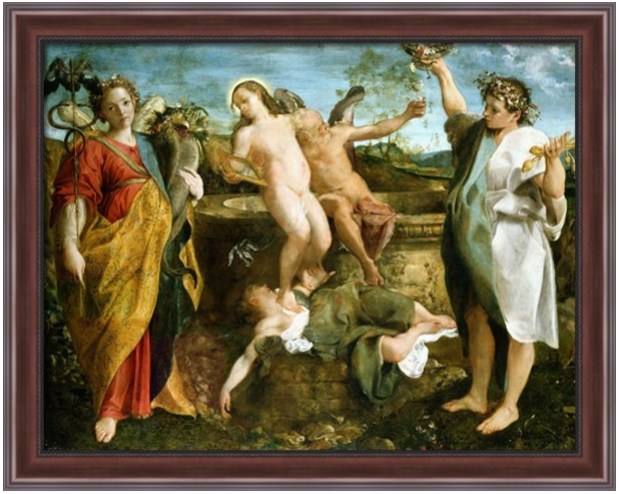
An Allegory of Truth and Time by Annibale Carrac

The winged figure of Time has brought his daughter, Truth, from the depths of a well to reveal her to the light of day. Truth radiates light and looks in a mirror, while two-faced Deceit is trampled under Truth’s feet. Framing the scene on the right is Happy Ending and on the left, Good Luck or Happiness. The moral seems to be both ‘all’s well that ends well’ and ‘the truth will out’.

Father figures are a bit complicated, which may be an understatement for some. On one hand, some associate fathers with being the disciplinatarian, on the other hand, others associate fathers with protection and provision. Regardless, Father Time is undoubtedly most generous to us. Like the air we breathe, we expect an endless supply of His gift of seconds, minutes and hours.

So, how do we treat these gifts of seconds, minutes and hours? Does taking these for granted diminish our capacity to fully harvest every drop of it? Should I agonize over the buckets that slip [un-noticed] through my hands? Or do I even notice or care?

The movie, Dead Poets Society is one of my favorite. Robin Williams play maverick English teacher John Keating with the immortal line, “Carpe Diem, seize the day, make your lives extraordinary!”

There’s wisdom too in the Book of Ecclesiastes, “For everything, there is a season, and a time for every matter under heaven.”

Unfortunately for all of us, Father Time’s largesse will run out before Mother Nature’s bounty. And so, we must make best of His largesse. And many of us, find that when we consciously relate to Father Time in Mother Nature, we come to rest in ourselves. Which takes us back to, there’s a season for everything.

Finally, may we realize the wisdom of “vanity of vanities, all is vanity” to spur us to plant our gifts from Father Time as seeds of love, in the lives of all around us.

p/s. A secret to internalize – Be in the present.

Surviving vs Thriving

In Alexander Solzhenitsyn’s book, “Warning to the West”, in his first speech to the West, he expressed hope that the West would learn from the Russians’ experience. This was when Solzhenitsyn was released from the Gulag, and had commenced a speaking tour to share his experiences. As time progressed, and the West started bending backwards as a result of détente, Solzhenitsyn pulled back on that optimistic expectation, and expressed doubt that human experiences could be transferred, that it seemed to be part of human nature to only learn first-hand. And thus, history does repeat itself.

On the COVID pandemic front, we are seeing this play out as un-vaccinated patients are hospitalized with the Delta variant. Mostly, they offer excuses for their vaccination hesitancy, with a handful still hanging onto their delusions as they are put on ventilators. Fortunately, the vaccination rate increases though the level of objection to proven masking tactics is stupefying this late in the pandemic; namely, this is the FOURTH wave, with several localities hitting all time records in ICU ward occupancies.

It appears there’s a lesson in this. That we can go through life solely based on our experiences, or taking in informed experiences of others. Clearly, we have to develop and exercise a critical discernment faculty when we start scanning and absorbing what is beyond our personal experiences. Perhaps that is the difference between surviving vs thriving.

Wicked men will be wrathful. Their anger we must endure as the badge of our calling, the token of our separation from them: if we were of the world the world would love its own. Our comfort is that the wrath of man shall be made to redound to the glory of GOD.

Charles H Spurgeon (on Psalm 76:10)

After mastering the 3 R’s, isn’t the next primary task of getting an education, the inculcation of a critical thinking/discernment ability? If so, how has America’s education system performed?

But there’s a critical assumption, that facts and logic will win out. Unfortunately, some are willing to bet their lives on deeply held convictions. This would be noble when a loving God was involved, not so when it’s self-centered values of individual liberty without regard to the common good.

And so, this generation will learn through their first hand experience. Perhaps the scars and trauma will serve the next generation(s) better. But unfortunately, our track record isn’t promising.

Reflecting Back to Journey Forward

A year unlike any, must surely be handled with care. Brought out the instruments, the special scopes, the probing devices because there’s much to discern. For to slumber through this reflection will surely result in fool’s gold being mistakenly added to my treasure store.


It was a year when I judged less, but discerned more. Judging matters in courts of law, but discernment triumphs in the court of life.


Blessings came disguised, sometimes wrapped initially as losses. The closure in cinemas consigned our annual unlimited movie pass into the back of our drawers. But the hours freed up enrich us beyond expectation. We cannot buy Time, so price-less is it.


Being scammed of a minor amount turned out to be another blessing in disguise. Anger at being fooled, a disruption in inner peace, an internal seething – all never made an appearance. What joy to know that this no longer troubled me. What joy to see it as God helping someone else, with what He blessed me with. Or what He consented to have me steward.


Walks, near and far, fair weather or drizzling rain was nature’s therapy to our souls. Conversations could not but work to bond us, as we employed our hearts more. Growing in the companionship, giving and receiving the simple joy of walking together, in the presence of each other. Aren’t these ingredients for love?


Friendships deepen, friendships die. A mere handful blossom into fellowship. Giving up others un-burdens both, as growth requires different.
As the exterior distractions shrinks, the interior opens up. Wisdom is so accessible and available, not requiring one to seek and visit sages in person like of old. My birthday gift of bookshelves are rapidly filling up. Perspectives change. Hearts softened. Hands reach out.


Pain and hurts arose. But not a few are due to internal expectations. And when I examined latter closely, I realized that it was much easier to re-calibrate those expectations than to manage or bury the pain and hurts. It’s like kicking the soccer ball first, and then, putting up the goal posts after the kick. How sweet.
Oh, I have taken a step forward and two steps back. It happens. Crying over split milk doesn’t do any good. What does good is knowing the motivation/trigger for the different steps. And making sure the feet is pointed in the right direction when moving forward.


The year in reflection is not so much the changing scenery outside my cabin window as I traveled from January to December. It’s more about the changes in me. And for that, there’s only One to thank.


“What is grace?” I asked God.

And He said, “All that happens.”


Then He added, when I looked perplexed,

“Could not lovers say that every moment in their Beloved’s arms was grace?”


Existence is my arms, though I well understand how one can turn away from me, until the heart has wisdom.

(St John the Cross / Daniel Ladinsky)

Coping

It has been a tumultuous 2020, with several more weeks to go. The news here in USA from the Covid-19 battle front are grim, with all time highs in various measures, be they daily infections, daily deaths, total hospitalizations and total infections. Within our own households, we have our own unique circumstances and challenges. Much has been communicated about the anticipated dangers in the winter months ahead. We are fatigued. How can we continue to cope?

How did generations before us cope during the multi-year world wars? There was “hope” that people clung to. Hope that appeared time and again. Man is a persistent species. In this pandemic period, the vaccine beckons as hope, that immunization will allow (adapted) life to continue. It matters not if others do not vaccinate, what matters is our own decision.

How should we then wait before mass vaccinations? Perhaps the first step is to examine the label we are now using, namely, “coping.” This label implies we are in a situation where there’s an externality that has disrupted our usual patterns, our lives. And we yearn for said externality to no longer pose a threat, to go away, so that we can resume our usual patterns and lives.

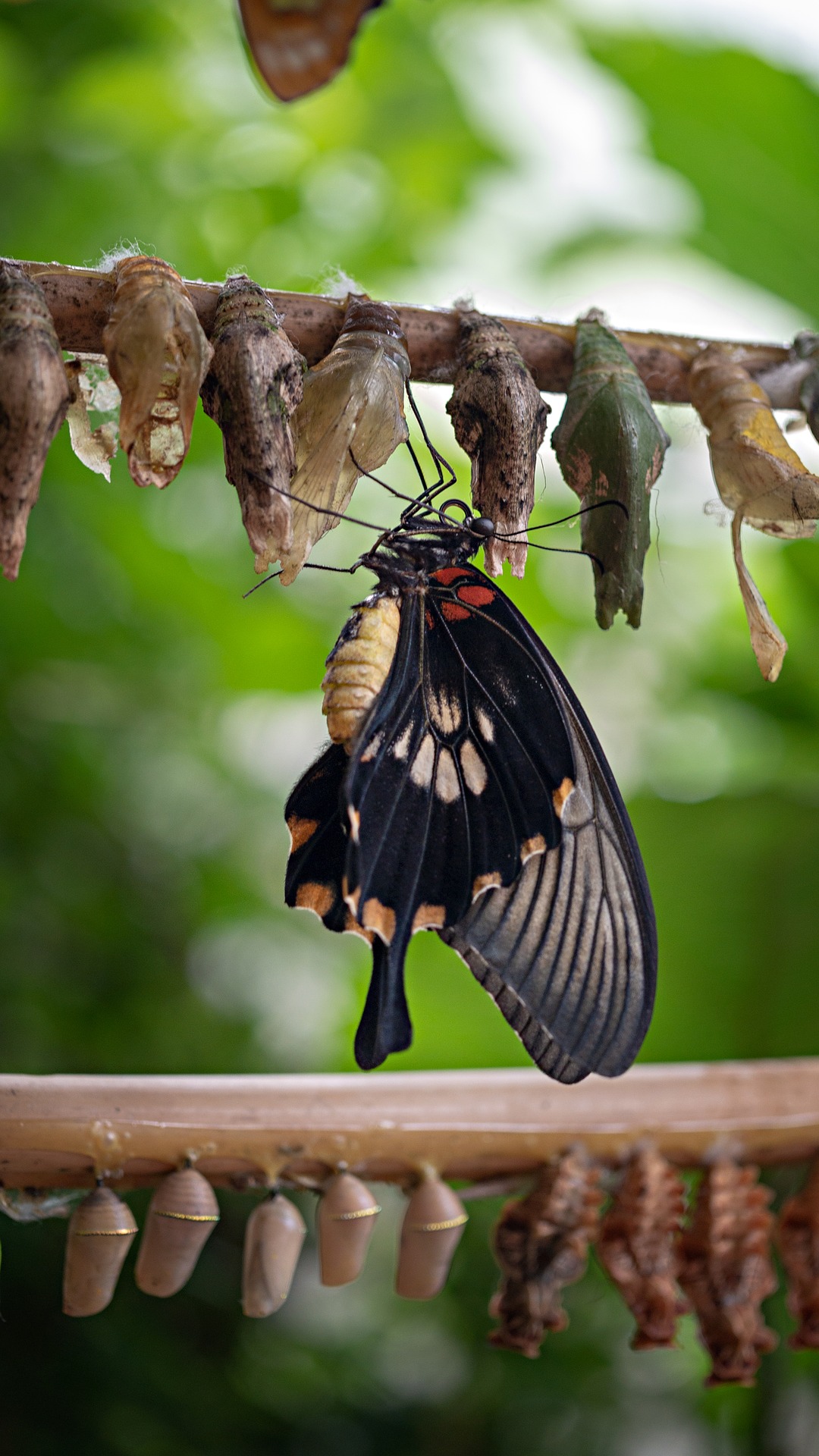
So, is there a better label than “coping?” What about “metamorphosizing”? Can this curtailed period be one in which like the caterpillar, we become convicted of what matters in life, and resolved to carve more time, more energy, more resources for it, post-curtailment? So that life after vaccination is one that no longer mirrors pre-pandemic life?

But what if this externality (i.e. pandemic) has a silver lining that we have overlooked? While the disruptions had real adverse impacts on our lives, many have gained precious time that was wasted in rush hour commutes, in mindless window-shopping excursions, etc. Time was given back to us. But if our mindset, our expectations is to cope, and we are anxious to resume our usual patterns and lives, then, this time given was likely squandered. A quick self-test is whether one can fill more than a few pages to share with grandchildren in the future how such time yielded un-planned blooms in one’s life.

Perhaps this quote from Bruce Lee, the famous martial artist actor can help with that inner metamorphosis:

“Be like water making its way through cracks. Do not be assertive, but adjust to the object, and you shall find a way around or through it. If nothing within you stays rigid, outward things will disclose themselves.

Empty your mind, be formless. Shapeless, like water. If you put water into a cup, it becomes the cup. You put water into a bottle and it becomes the bottle. You put it in a teapot, it becomes the teapot. Now, water can flow or it can crash. Be water, my friend.”

I recognize some are struggling mightily with the pandemic-related impositions and adversities. That there are severe psychological, emotional and mental struggles. Hopefully, they have loved ones who are supporting them. If nothing else, this pandemic has revealed that without love, one has nothing, one has gained nothing (1 Cor 13:2-3). And with that insight, if all we can do post-pandemic is to sow abundant love, we have lived a rich life indeed.

Self Actualization

I recall my idealistic genes kicked in real hard during my mid-teen years, when I was 17 years old. There was a not-brief interlude when I fell head over heels in love, but these genes kept on plugging away.

That period was colored by a greater awareness of the social and global issues prevalent then, and continues in one form or another to this day. It was augmented by respected teachers who broadened one’s awareness beyond the formal school curriculum. It was sharpened by student leadership courses and late discourses with those of like mind.

In hindsight, it seemed natural, not unexpected, when those idealistic genes turned its focus to the question of one’s own potential. After all, didn’t Michael Jackson sing that change started with the “man in the mirror”?

Thus, there was quite a prolonged period during my career when I devoured self-improvement books like cereal in the morning. It was all about self mastery, uncovering and honing one’s strengths and potential, and cultivating new mindsets and habits. I found this cool label, “self-actualization” that appealed to my evolving consciousness. As I was also attempting to climb the corporate ladder, there was a healthy mix of management, leadership and organizational reading thrown into the blender. I probably accumulated more than 150 books, if not more. I never did an exact count and many were left behind as I made the trans-pacific journey Stateside.

So, how has this worked out for me? There has been no regrets. I feel strongly grounded, confident and self-assured. There’s no doubt that this internal work has positioned me for career opportunities that I was able to take advantage of. There’s also no doubt that this “self-actualization engine” will not take me where I want to go in this next phase of life. What do I mean?

Life is never a straight climb upwards. Life provides us plateaus. As the commercial goes, the “pause that refreshes.” Plateaus allow us to cast our eyes ahead in time. To discern if the anticipated (future) outcome of our current trajectory remains our desire now that we are further in our journey. To ask if success is still the aim, or if significance and legacy is the new aim. Some fortuitously perceive a ‘better’ path ahead. They become self-aware, and paradoxically, adjust that internal engine, from self-actualization to other-actualization. The “other” can be children, grand-children or even a larger community. Those of us familiar with William Shakespeare’s notable quotes will recognize this, “A rose by any other name would smell as sweet“. And thus, “other-actualization” is the same as Christ’s Second Commandment.

For me, the plateau involved an awakening of my spiritual self. The new self was stirring itself. And I threw off my self-actualization totally with these Scripture from Isaiah 64:8.

But now, O Lord, you are our Father;

    we are the clay, and you are our potter;

    we are all the work of your hand.

How wonderful the thought, that all we have to do is yield, be pliant and God will wrought His goodness according to His will. I can rest in Him and cease all my striving.